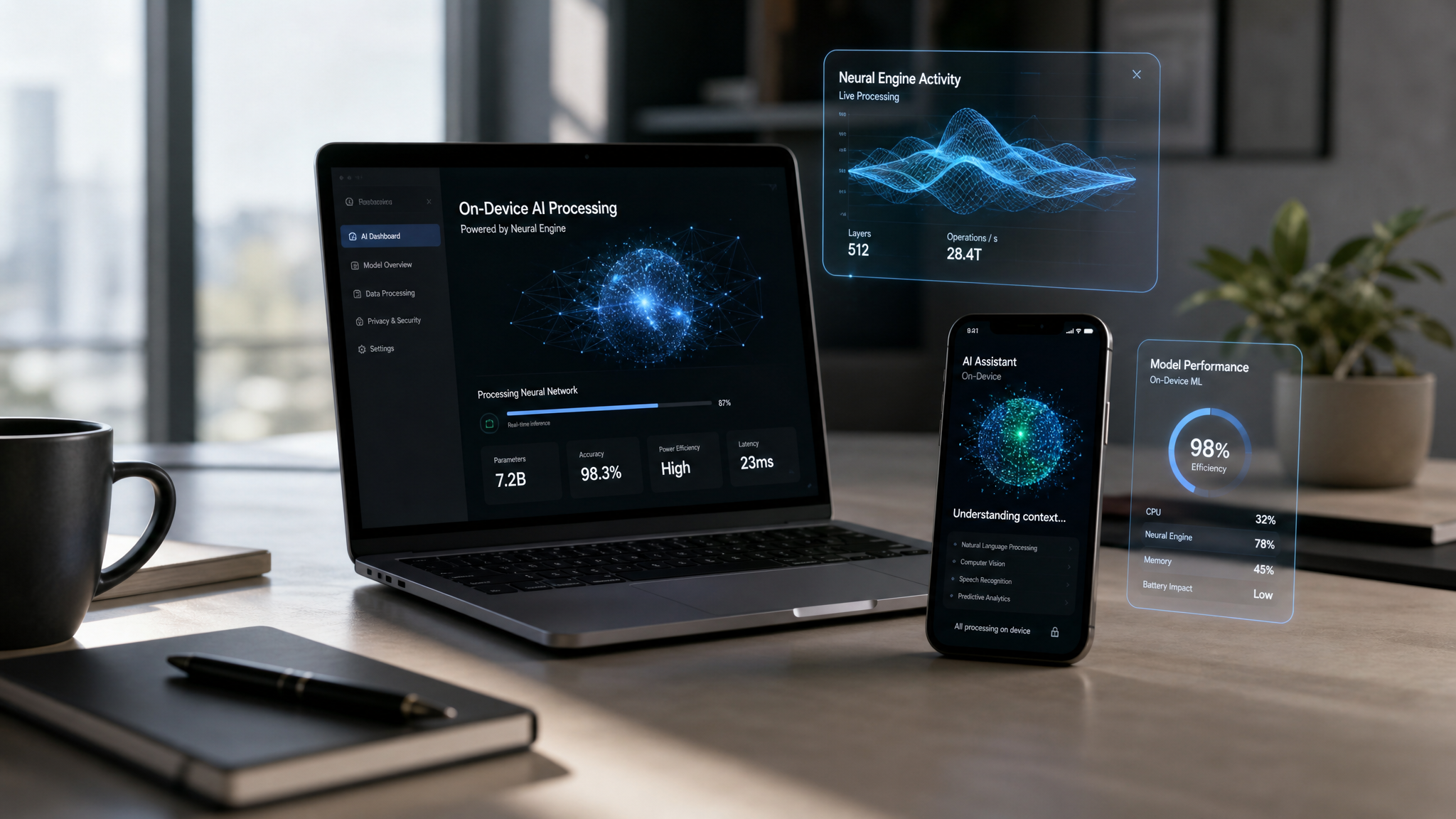
The conversation around AI in 2026 is changing from "which model is largest?" to "which model is most deployable?" Open-weight systems and smaller specialized models are becoming increasingly important because many organizations want more control over where inference runs, how data is handled, and how quickly a system can be updated.
Open-source and open-weight models are attractive because they reduce lock-in. Companies can fine-tune them on proprietary data, run them in private environments, and switch architectures without rebuilding entire applications from scratch. That flexibility matters in regulated industries and in organizations with sensitive data.
At the same time, the rise of smaller models is redefining what "good enough" means. Many tasks do not require a massive frontier model. Summarization, classification, retrieval, workflow routing, and domain-specific assistance can often be handled effectively by compact models that are cheaper to run and easier to secure.
The result is a more layered AI stack. Large models still matter for complex reasoning, but they are increasingly used in combination with smaller systems that handle more routine work. That hybrid approach is likely to define the next phase of AI adoption.