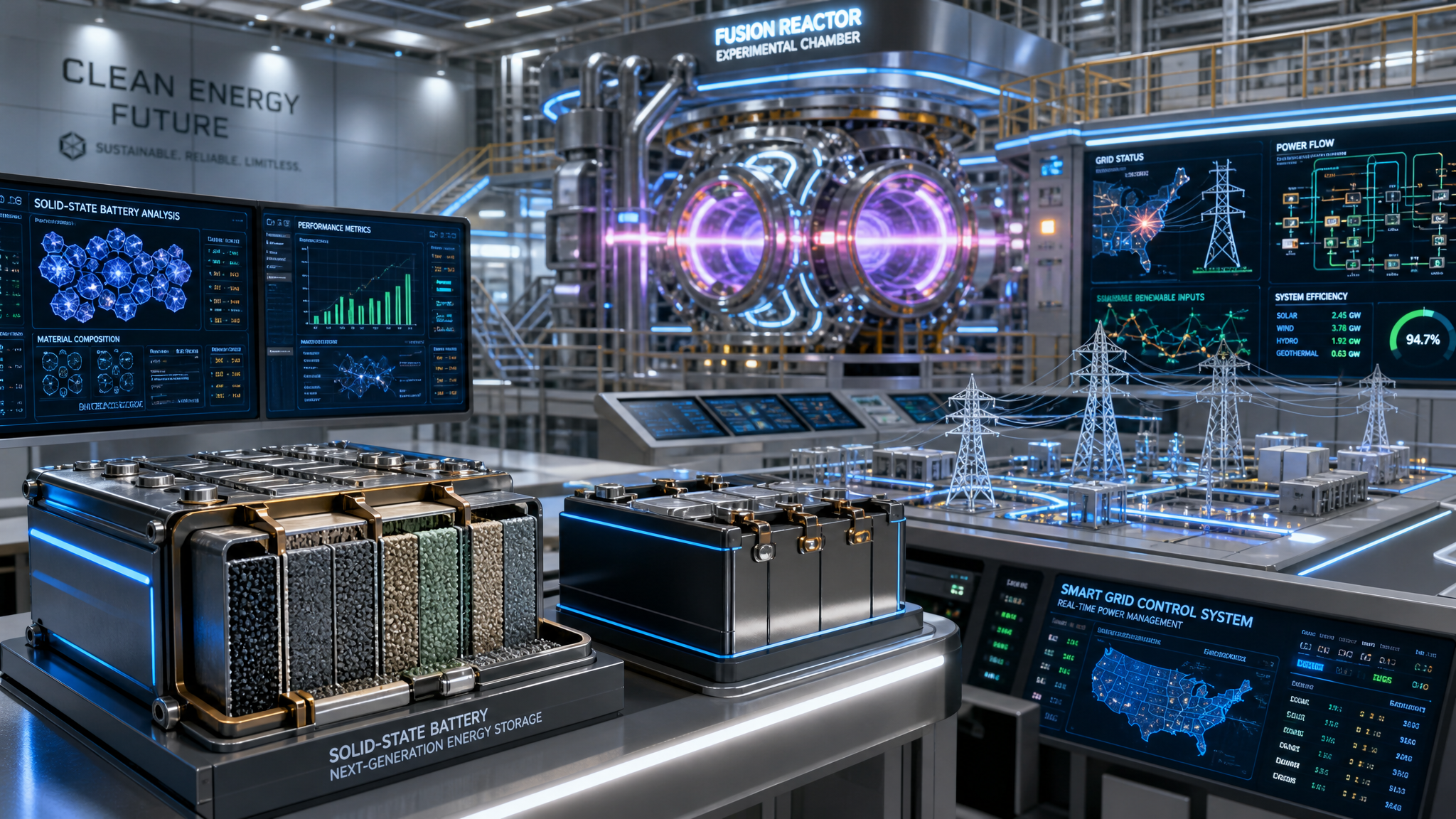
Clean-energy innovation in 2026 is becoming less abstract and more industrial. The conversation is no longer limited to research prototypes or long-term climate targets. It now includes the engineering and financing questions needed to bring new technologies into the real world.
Fusion is attracting renewed interest as developers look for capital, partnerships, and pathways to pilot plants. High-temperature superconducting magnets, better plasma modeling, and more powerful simulation tools are helping teams design smaller, more efficient systems.
Batteries and storage are advancing on a more immediate timeline. Traceability, safety, and supply chain transparency are becoming essential as governments and customers demand clearer records of how batteries are made and managed.
The broader story is that innovation now depends on deployment as much as invention. A breakthrough is only meaningful if it can connect to the grid, fit into industrial systems, and survive the economics of scale. That makes clean-energy technology one of the most important innovation arenas of the year.